Friday, 6 June 2014

Being a refugee is fairly unimaginable to those of us who have grown up in living in a safe and peaceful country. It is hard to even comprehend the kind of struggles and hardship that comes from being a refugee. Global Footprints, a website dedicated to issues like refugees, debt, migration and the environment, explains the struggle beautifully, describing refugees in the following manner: “Refugees leave their homes and their country because they have no other choice. They are forced out by factors such as war, persecution, natural disasters, environmental crises and poverty. They may also leave because their government will not or cannot protect them from serious human rights abuses or meet their needs. Whatever the reason, refugees leave their homes because they fear for their own life or safety, or that of their family. Many refugees leave their homes suddenly and are able to take very few if any of their possessions with them. Sometimes they face many days of travel, with little food and in fear of their lives.” (globalfootprints.org, 2009).


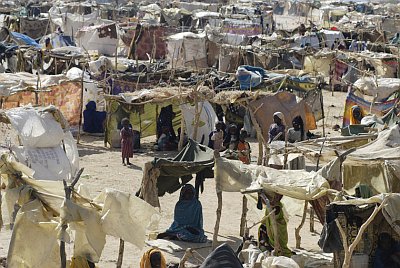
Not only do refugees face the horrors that forced them to leave their homeland, as well as the usually hard and dangerous journey away from the violence, but most end up living in terrible conditions in refugee camps, with not enough food to go around, a lack of sanitation, education, health care and supremely overcrowded conditions. “Fifty per cent of refugee dwellings are inadequate and hundreds of thousands struggle to pay their rent, according to the findings.” (UNHCR, 2014) Many must continue this lifestyle, however, as they have no other choice and no financial means to flee. The website http://www.uniteforsight.org/refugee-health/module3 shares terrible horror stories about the lifestyles and conditions in refugee camps, conditions that no human being should have to live with. It is inhumane that we allow people to live like this rather than accept their applications for coming to Canada.


Refugees being kept in horrible surroundings in Somalia.
Desolate living conditions in a refugee camp in Chad.


Congolese children in a refugee camp escaping from war. May 2014.
As mentioned in the quotation above, the majority of refugees leave their home country for the following reasons: (UN Refugee Agency, 2013)
  • Persecution because of race, religion, sexuality, etc...
  • War/Conflict
  • Violence (ethnic, tribal and religious violence being the most common)
    2014 Civil War in Africa
The majority of the 15.2 million refugees in the world come from Pakistan, Afghanistan, Colombia, Sudan, Democratic Republic of Congo, Iran and Sri Lanka. All of these countries are known for conflict and violence. Approximately 80% of the refugees are women and children and 46% of refugees are under the age of 18. Only 11% percent of the 15.2 million people who annually ask for safety receive what they as for. (All statistics provided by dosomething.org, 2012.)
Map Depicting Refugee Migration Across the Globe
(As shown, the majority come from Asia and Africa)

These statistics are ridiculously high. This is yet another reason that I believe that the Canadian refugee policies are far too harsh. People should not be forced to live in the conditions stated above and we in Canada have the resources to help. It is against every human being natural rights to force them to live in areas of conflict, violence and harsh persecution, as well as to live in conditions that are that desolate. We should be trying to help those people and the world has ample means to help much more than 11% of those who seek protection. In my opinion, we should be trying to help, not turning people away. Because of how many people who could be helped are turned away, and because we do have the capabilities to accept more people, Canada’s refugee policy is far too harsh, particularly considering how terribly many of these people must live and the fact that we are capable to help resolve a part of this issue.

This video shows the devastating journey that refugees 
must make to get to safety and the conditions and desolation
present in the refugee camps through shots of the refugees
and the camp. 

Wednesday, 4 June 2014

Introduction to Refugees and Canada


When people think of Canada, the first thing to come to mind is typically the stereotypes of our massive country; hippies wearing flannel shirts saying “eh”, maple syrup, igloos, snow and ice (and of course with ice comes hockey!), polite speaking bilinguals and Tim Hortons (“Timmies” for true Canadians of course). Aside from all of these clichés, Canada is known for many more things- Canada is an extremely progressive country, home to legalized same-sex marriage, as well as allowing same-sex couples to adopt, free health care and education, democracy and maternity and paternity leave, while still being,
according to Forbes magazine, the best country in the world to do business. If Canada is such a progressive country, however, how come so few refugee applications are accepted? Canada needs workers both because of an aging population and because women are having fewer children. Canada is also already home to a very multicultural group of citizens, with lots of access to language and translation centres, along with plenty of resources, both naturally and socially. Besides- we hardly lack the space…
Canadian Flag


According to settlement.org, there exist two kinds of refugees: convention refugees and persons in need of protection. Convention refugees are people with a well-founded fear of persecution in their home country because of; race, religion, political opinion, nationality or because they are a member of a specific social group (for example women, LGBTQ, etc…). A person in need of protection, on the other hand, is someone who faces the following dangers if they go back to their country of origin; torture, risk to their life* or risk of cruel and unusual treatment/punishment. The Canadian government explains refugees in the following fashion: “ Refugees are people who have fled their countries because of a well-founded fear of widespread persecution, and who are unable to return home. Many refugees come from war-torn countries and have seen unthinkable horrors. A refugee is different from an immigrant, in that an immigrant is a person who chooses to settle permanently in another country. Refugees are forced to flee.” A person may claim refugee status when arriving by land, sea or air and can also make a refugee claim outside of Canada if sponsored by the government or by private group.
Refugee applications vs. acceptances
When researching, I found it incredibly hard to believe how low some of the statistics actually were for refugees. In 2011, 16, 122 refugees were rejected status in Canada, whereas only 12, 983 were accepted. 1, 756 people’s applications were simply abandoned and 3, 396 applications were withdrawn. These numbers are significantly worse off than in the past. Ten years prior, 19, 577 refugees were accepted into Canada, and 7, 646 refugees were rejected. 648 people’s applications were rejected and 724 were withdrawn. These statistics are still not great, however, they are much better than the more current ones. I thought that nation’s were supposed to progress and improve over time, not go backwards.

As the statistics states above imply, becoming a Canadian refugee is no easy task. According to the government of Canada website, “Not everyone is eligible to seek asylum. For example, people convicted of serious criminal offences and people who have had previous refugee claims denied by Canada are not accepted.” To be considered a refugee, it must be proven that you will be in serious danger if you return to your country of origin, and that this danger is without legitimate reason (you are not, for example, a murderer trying to escape persecution). Proving that you are legitimately in danger is quite challenging. There are times when it is simpler, like if, for example, if you are trying to escape a country that is known to be experiencing huge, war-torn conflict, however, proving true refugee status and the danger that you are trying to escape is never easy.

Therefore, because of the extremely low numbers of refugees accepted and the high criteria required to be accepted into Canada, the Canadian refugee policy is far too harsh.

*Canada does not accept refugees facing the death penalty in their own countries for legitimate reasons, even though Canada does not have capital punishment. If, for example, an American prisoner is facing execution for murder, he or she will not be accepted to Canada as a refugee despite their life being at risk.